WhatsApp 1-702-900-9975
The journey in perspective
What makes TRAIN SUITE SHIKI-SHIMA distinctive?
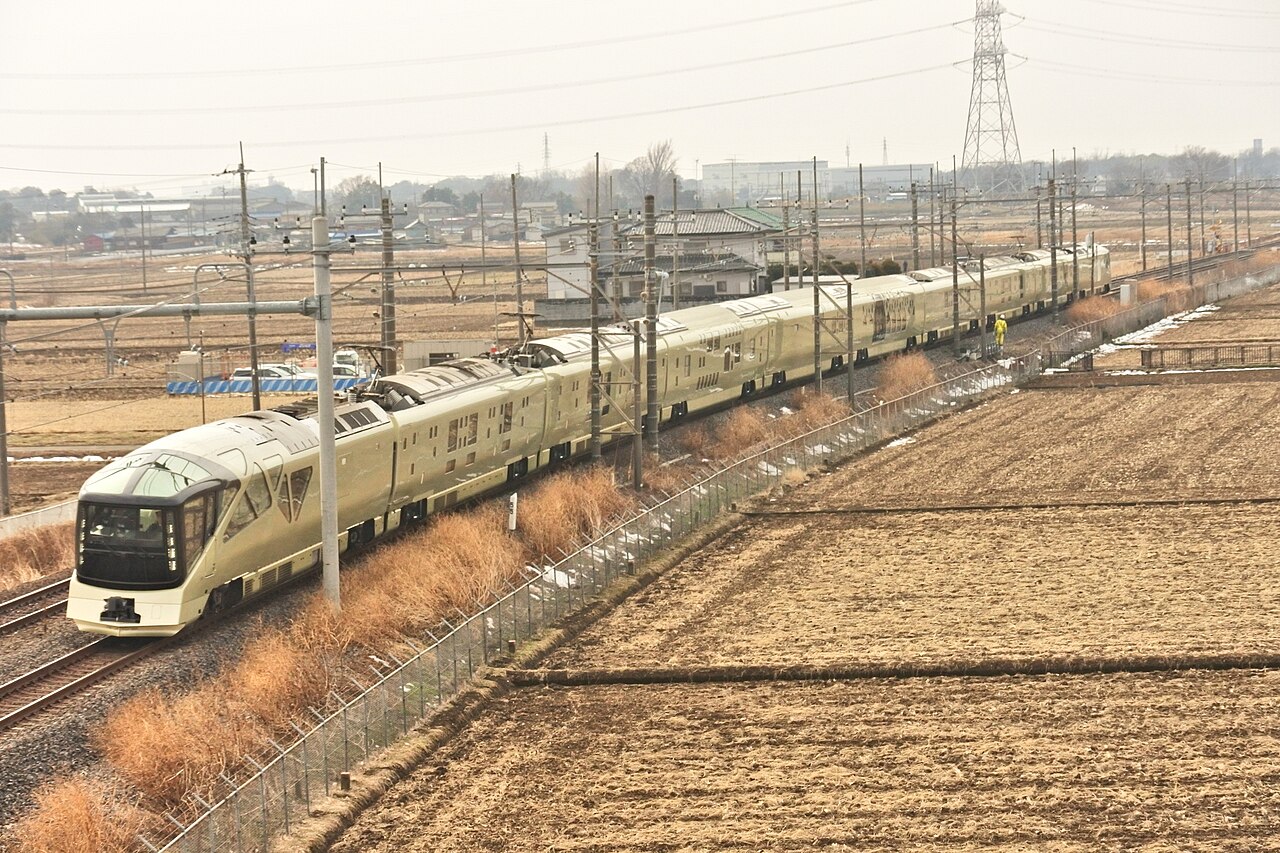
SHIKI-SHIMA places contemporary design alongside regional Japanese craft. The contoured windows of its observation cars make landscape viewing a deliberate part of the experience, while Lounge Komorebi uses forest-inspired forms and handmade objects from eastern Japan. Dining follows the regions and season of the course. The two-floor SHIKI-SHIMA Suite adds tatami and a cypress bath; the Deluxe Suite provides a different large-room layout with its own bath. These are distinctive upgrades, but the standard Suite Room still belongs to the same small-group journey, with shared access to the train's principal public spaces.
Bedrooms, suites and your private retreat
Choose accommodation by the way you want to travel: sleeping arrangement, bathroom facilities, room to move and daytime seating. Category names alone do not make two trains equivalent.
- Suite
- Deluxe Suite
- Maisonette
Standard suites and two bath-equipped special rooms
Fifteen standard Suite Rooms sit across five sleeping cars, while Car 7 contains the SHIKI-SHIMA Suite and Deluxe Suite. The two special rooms have cypress baths; that feature should not be inferred from a photograph when booking a standard Suite Room. The SHIKI-SHIMA Suite has a two-level arrangement with tatami, creating a different experience from a single-level sleeping compartment.
Choose the room for its actual floor plan as well as its appearance. A split-level suite can be attractive for separating activities, but steps and the route between bed and bathroom may matter more for some travellers. Shared observation cars and Lounge Komorebi remain important parts of the journey whichever room is allocated. Confirm bedroom and bathroom details against the specific application category before committing.
- Cypress baths belong to the SHIKI-SHIMA Suite and Deluxe Suite.
- The SHIKI-SHIMA Suite uses a two-level layout with tatami.
- Fifteen standard Suite Rooms are additional to the two special rooms.
Ask us to compare the available categories and applicable offers for your dates. We will confirm the exact seating or sleeping arrangement in your proposal.
Food, dining and the daily rhythm
The culinary program draws from ingredients and techniques encountered along the route. Meals are part of a wider gastronomy narrative rather than isolated fine-dining events. Clothing should be polished but comfortable; seasonal layers matter because excursions can move from a climate-controlled train to coastal, mountain or winter conditions.
Regional dining within a seasonal course
Dining SHIKI-SHIMA occupies its own carriage, with the food programme linked to the places and season of the journey. The interest is in an organised encounter with eastern Japan, not merely a luxury meal between two stations. Meals, regional visits and time in the lounge work together, so the selected course is the most useful guide to the culinary experience.
Look at where each principal meal is scheduled before choosing a departure. An itinerary with time ashore has a different rhythm from one concentrated aboard, and a longer course should not be read as identical dining repeated for more nights. Supply dietary restrictions during the application process and ask how they affect the course. A famous kitchen or featured dish should not be assumed on every departure.
Tell us about dietary requirements when you inquire. Included beverages, special menus and the pace of off-train visits should be confirmed for the exact departure.
How to plan this journey well
Review the exact seasonal course, duration and places visited before choosing dates for flights or other Japanese hotels. JR East publishes one-, two- and three-night courses across its programme, but not every duration runs in every season. Applications are handled separately from ordinary rail tickets and open for specified future departure periods. Confirm the language support and excursion requirements that apply to your booking channel. Leave time to reach the dedicated Ueno departure lounge without relying on a same-day international arrival.
Who will enjoy it most?
Design-minded travellers seeking a structured introduction to eastern Japan's landscapes, food and regional craftsmanship.
Accessibility and individual needs
Contact JR East before applying to discuss step-free access, onboard movement and excursion requirements. The train’s compact design and varied off-train program require individual assessment.
Share mobility needs, luggage concerns and any important personal requirements before paying a deposit. We will request the relevant details; an inquiry is not a guarantee that a particular request can be accommodated.
Make the train part of a complete holiday
Explore our Japan destination guidance for context around the rail journey. Consider your arrival city, a comfortable night before boarding and the onward connection before committing to flights.
Also considering another style of journey? Read our Seven Stars in Kyushu guide, then compare the trains side by side.